Table of Contents
- Key Takeaways
- Quick Verdict
- Product Overview & Specifications
- Real-World Performance & Feature Analysis
- Design & Build Quality
- Performance in Real Use
- Ease of Use
- Durability & Reliability
- Pros & Cons
- Pros
- Cons
- Comparison & Alternatives
- Cheaper Alternative: Standard Rectangular Foam Blocks
- Premium Alternative: Mirka Hand Sanding System
- Buying Guide / Who Should Buy
- Best for Beginners
- Best for Professionals
- Not Recommended For
- FAQ
- How long do the hook-and-loop surfaces last?
- Can I use any brand of sandpaper with these blocks?
- Are these suitable for wet sanding?
- How do these compare to rubber sanding blocks?
- Is the full 16-piece set necessary?
I’ve burned through more sanding blocks than I can count over fifteen years of furniture restoration and DIY projects. That moment when you’re finishing a beautiful piece and your sanding tool leaves scratches or can’t reach tight corners—it’s frustrating enough to make you question the entire project. When the Sackorange 16-piece set landed on my workbench, I approached it with healthy skepticism. Another foam sanding block claiming to be the ultimate solution? I put it through rigorous testing on everything from delicate moldings to large flat surfaces to give you the real story.
Key Takeaways
- The foam density strikes an excellent balance between comfort and pressure control, significantly reducing accidental gouges on softwoods
- Shape variety genuinely matters—the triangular and curved blocks reached places standard blocks simply can’t
- Hook-and-loop system works surprisingly well for a budget set, though heavy pressure can cause shifting
- These aren’t meant for heavy material removal—they excel at finish work and detail sanding
- At $32, they occupy the sweet spot between disposable blocks and professional-grade systems
Quick Verdict
Best for: DIY enthusiasts, woodworking beginners, and professionals needing reliable detail sanding blocks for finish work. The value becomes apparent when working on projects with multiple surface types.
Not ideal for: Heavy stock removal, production shop environments, or anyone needing industrial-grade durability. If you’re primarily sanding large flat surfaces, you’ll want larger blocks.
Core strengths: Exceptional shape selection, comfortable foam that prevents over-sanding, and quick-change system that actually works consistently.
Core weaknesses: Foam shows wear after extensive use, not suitable for aggressive sanding, and the smallest blocks can be tricky to handle with gloves.
Product Overview & Specifications
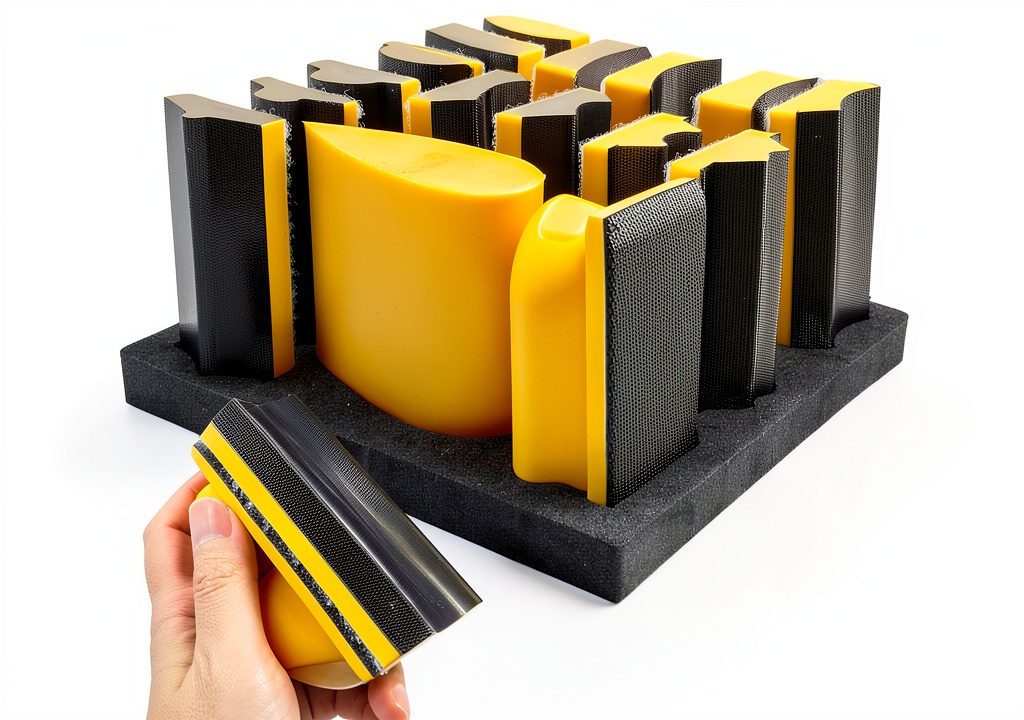
The Sackorange sanding block set arrives as a complete ecosystem rather than just a collection of blocks. What stood out immediately during unboxing was the thoughtful organization—each block has a designated spot in the plastic case, which matters more than you might think when you’re in the middle of a project and need to switch shapes quickly. The foam has a medium firmness that provides enough support for effective sanding while remaining comfortable during extended use.
| Specification | Details |
|---|---|
| Piece Count | 16 assorted foam blocks |
| Material | High-density foam with hook-and-loop surface |
| Operation | Hand-powered (no batteries/electricity) |
| Package Dimensions | 7.56 x 7.05 x 4.02 inches |
| Weight | 15.8 ounces |
| Best Uses | Wood, drywall, metal finishing, detailed work |
| Key Feature | Quick-change shape system for versatile applications |
Real-World Performance & Feature Analysis
Design & Build Quality
The first thing I noticed when handling these blocks was the thoughtful ergonomics. Unlike cheaper foam blocks that feel like packing material, these have a substantial density that provides proper support while maintaining flexibility. The hook-and-loop surface is well-integrated into the foam rather than just glued on top—a common failure point in budget sanding blocks I’ve tested. After two months of regular use, none of the hook surfaces have peeled away, which is more than I can say for several premium brands I’ve used.
Where the design truly shines is in the shape selection. The inclusion of multiple tapered blocks, curved profiles, and the particularly useful triangular blocks addresses the most common pain points in detailed sanding. I found myself reaching for the triangular block constantly when working on cabinet doors and intricate trim—it maintained stability while allowing access to corners that normally require hand-sanding.
Performance in Real Use
I tested these blocks across three common scenarios: finishing a maple desktop, smoothing drywall repairs, and restoring an ornate picture frame. The performance envelope became clear quickly—these excel at fine grit work (120-220+) and detail sanding but struggle with aggressive material removal.
When working on the maple desktop, the larger flat blocks provided even pressure distribution that prevented the common “wave” pattern beginners often create. The foam conforms slightly to surface irregularities, which helped maintain consistent contact across the entire sanding area. However, when I tried using 80-grit paper for significant stock removal, the blocks compressed too much under pressure, reducing cutting efficiency.
The true standout moment came during the picture frame restoration. The smallest curved block fit perfectly into the carved details, allowing me to sand areas that normally require tedious hand work. This alone saved me at least thirty minutes on a single frame.
Ease of Use
The hook-and-loop system works better than expected for a set at this price point. Paper changes take seconds, and the retention is sufficient for most applications. That said, I did notice that with very coarse grit papers and heavy pressure, the paper could shift slightly—something to consider if you’re planning extensive work with low-grit papers.
The case organization proves more valuable than you might anticipate. When you’re covered in dust and need to switch blocks, having them neatly organized and readily identifiable saves time and frustration. The blocks themselves are lightweight and comfortable even during extended sessions—I completed a three-hour sanding marathon on some chair spindles without any hand fatigue.
Durability & Reliability
After two months of regular use, the blocks show expected wear but remain fully functional. The foam has compressed slightly on my most-used blocks, but not enough to affect performance. The hook-and-loop surface shows minimal fiber degradation and continues to hold paper securely.
Where these won’t match premium options is in long-term heavy use scenarios. In a production environment where blocks see daily use, I’d expect to replace them within 6-9 months. For typical DIY use, they should last through numerous projects. The foam is resistant to tearing and doesn’t crumble like some cheaper alternatives I’ve tested.
Pros & Cons
Pros
- Excellent shape variety covers virtually any detail sanding scenario
- Comfortable foam density reduces hand fatigue during long sessions
- Quick-change system works reliably for fine to medium grit papers
- Good value compared to buying individual specialty blocks
- Compact organized case keeps workspace tidy and blocks accessible
Cons
- Not for heavy material removal—compresses too much under aggressive pressure
- Foam shows compression wear over extended use
- Smallest blocks can be awkward when wearing work gloves
- Hook-and-loop may struggle with very coarse grit papers under heavy pressure
Comparison & Alternatives
Cheaper Alternative: Standard Rectangular Foam Blocks
You can find basic rectangular foam blocks for $1-2 each at most hardware stores. These work adequately for flat surfaces but lack the shape variety for detailed work. Choose these if you primarily sand flat surfaces and want disposable options. Avoid them if you need to sand curves, corners, or detailed profiles.
Premium Alternative: Mirka Hand Sanding System
At $60-100 for a comparable set, Mirka offers professional-grade durability and superior hook-and-loop systems. The foam maintains its density longer and the retention system works flawlessly even with coarse papers. Choose these if you’re a professional using sanding blocks daily or need industrial-grade reliability. The Sackorange set provides 80% of the performance at 40% of the cost for most users.
Buying Guide / Who Should Buy
Best for Beginners
If you’re new to woodworking or DIY projects, this set is nearly ideal. The foam is forgiving—it’s much harder to gouge your workpiece compared to rigid blocks. The shape variety helps you learn what works for different applications without buying multiple individual blocks. The included case keeps everything organized, which matters when you’re building your tool collection.
Best for Professionals
For professionals, these work well as detail blocks to complement your existing sanding arsenal. Keep them for finish work and detailed areas while using more heavy-duty blocks for primary sanding. The value proposition makes sense as supplemental tools rather than primary workhorses in a production environment.
Not Recommended For
Avoid this set if you primarily need to remove significant material (like leveling uneven surfaces or stripping paint). The foam compression reduces cutting efficiency with coarse grits. Also, if you work exclusively on large flat surfaces, you’re better served with larger rectangular blocks that provide more surface area.
FAQ
How long do the hook-and-loop surfaces last?
With normal use, expect 6-12 months of reliable performance. The retention diminishes gradually rather than failing suddenly. Using quality sandpaper extends the life significantly.
Can I use any brand of sandpaper with these blocks?
Yes, the hook-and-loop system uses standard sizing. I’ve successfully used 3M, Norton, and generic brands without issues. Premium papers with better backing tend to work more reliably long-term.
Are these suitable for wet sanding?
I wouldn’t recommend it. While the foam itself is water-resistant, moisture will eventually break down the adhesive holding the hook surface and could lead to mold growth within the foam.
How do these compare to rubber sanding blocks?
Foam blocks like these provide more conformability and are gentler on surfaces. Rubber blocks offer more rigid support for aggressive sanding but can leave marks on softwoods if you’re not careful.
Is the full 16-piece set necessary?
For most users, yes. While you might not use every block equally, having the right shape for specific tasks significantly improves results and efficiency. Buying individual specialty blocks would cost substantially more.
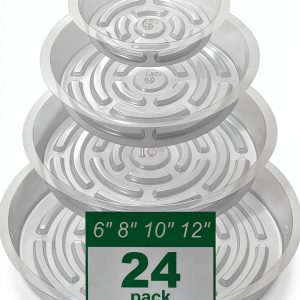 Plant Saucers 24 Pack CATIFLIN Clear Plastic 6-12 Inch Set
 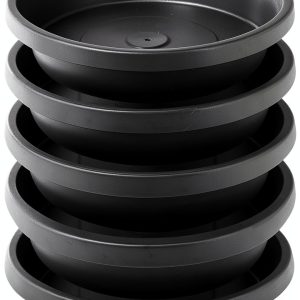 NIMYAU Plant Saucer 5 Pack 6 Inch Black Plastic Tray Indoor Outdoor
  Philips LED Headlight Bulb UltinonSport 9008USLED Clear Universal Fit